

This week we launched TruckStock with a large national company. I have been waiting a long time to write that sentence.
I watched a short video today that I almost scrolled past. A filmmaker named Alex Kendrick talks about finishing a movie, flying out to every studio that would give him a meeting, and hearing no, no, no, no, no. He came home frustrated. He had done the work. He had knocked on every door he could find. The doors stayed shut.
I’m not sharing that clip because I think our software launch is a religious experiment. It isn’t. I also don’t feel like we got ahead of God. I don’t look back on these years and think the problem was that we ran out in front of Him. If anything, we ran in a lot of directions, some of them useful, some of them just busy, and we had to learn the difference.
What I do recognize in that story is a business lesson about timing and ownership. There is a kind of work where you knock on every door, and the knocking itself starts to feel like progress. There is another kind of work where you keep the thing in your own hands, stay patient, and let the right doors open when the work is actually ready.
The first way looks like hustle. The second way looks slower. I have tried both with TruckStock.
Here is the clip that got me thinking. It is a companion to this post, not the point of it.
Alex is talking about a film, and about faith, and about finally letting the work belong to God instead of treating God like an employee. That last line is the one people remember: the Lord is not my employee. For me, the part that stuck was earlier. He jumped ahead. He flew out and knocked on every door. He came home empty-handed, not because the work had no value, but because the timing and the ownership were off.
I know that feeling in business. I have lived it more than once.

The First Attempt: Build It and They Will Come
I don’t remember the exact month we first sketched TruckStock. I remember the feeling. We had a problem in front of us, the kind that shows up in a shop or a yard when nobody can quite tell you what is on a truck, what should be on a truck, and who is responsible for the gap. We thought, if we build a clean way to handle that, people will come find it.
That is a hopeful way to start a product. It is also a thin one.
We built. We polished. We waited. A few local companies were curious. Curiosity is not the same thing as a launch. “Build it and they will come” works in movies and in the occasional lucky startup. It is a weak plan for a tool that has to live inside other people’s operations, especially when those operations involve a lot of trucks and a lot of moving parts.
I was inexperienced in a way I didn’t want to admit at the time. I knew how to write software. I knew how to solve a problem once I was sitting with the person who had it. I didn’t yet know how long it takes to earn a place in someone else’s daily work. We had a product. We didn’t yet have a path.
Looking back, I am almost fond of that first attempt. It was honest. It was ours. It just was not enough. Inexperience is not a moral failure. It is a stage. The trouble comes when you treat the stage like a strategy.
The Second Attempt: Eggs in Someone Else’s Basket
The second attempt had real effort behind it. We were not dabbling anymore. We had learned enough to know that a good idea needs a partner, a channel, a way to get in front of the people who actually run fleets. So we found a partner. We leaned in. And slowly, without a single dramatic moment I can point to, their vision started to swallow ours.
That is a hard sentence to write, because I don’t think anyone set out to make that happen. Partnerships drift. You start out building something together, and then you look up and realize you are building their thing, on their timeline, with their name closer to the center than yours.
During COVID, we got paid to write custom software for someone else. We called it MyTruck. It was real work, with a real paycheck, at a time when a lot of businesses would have been grateful for either. I’m not ungrateful. The work kept people busy and it solved a problem. It also put our eggs in someone else’s basket.
MyTruck fizzled. I won’t belabor that, and I won’t name the client. Products that live in someone else’s basket often do. When their attention moves, or their plans change, or the season ends, the thing you built has nowhere to stand.
Here is the part I want to be clear about. We never gave up on TruckStock. Even when the calendar was full of someone else’s software, TruckStock was still in the back of the shop. We would pick it up again, put it down, pick it up again. It would have been easier to call it a lesson and move on. We didn’t.
If the first attempt was inexperience, the second was a different kind of education. Effort is not the same thing as ownership. You can work very hard on a thing and still not be the one who gets to decide what happens to it. That is a quiet lesson, and it took me longer than I wish it had.
I don’t tell this part to settle a score. I tell it because I have talked with enough small business owners to know the pattern is common. You say yes to work that pays. You tell yourself you can keep your own idea alive on the side. Then the side becomes the middle of the night, and the idea starts to feel like a hobby you are failing at. If that is you, I hope you keep the thing that is actually yours. It is easier to set down than it looks, and harder to pick back up than you think.
Coming Back Around
Which brings me to this week.
C2IT Consulting did not start with a product like TruckStock. Our first clients were an association of franchises. We learned how to serve a group of businesses that looked related from the outside and were fiercely themselves on the inside. Then we spent nearly twenty years doing other good work, the kind of client work that pays the bills and teaches you a hundred useful things, and somehow we drifted from that original pattern.
Now it is coming back around. Not as a copy of the old days, but as a return to something we already knew how to do. Serve a network. Build a tool that can live in more than one shop. Keep the work in our own hands.
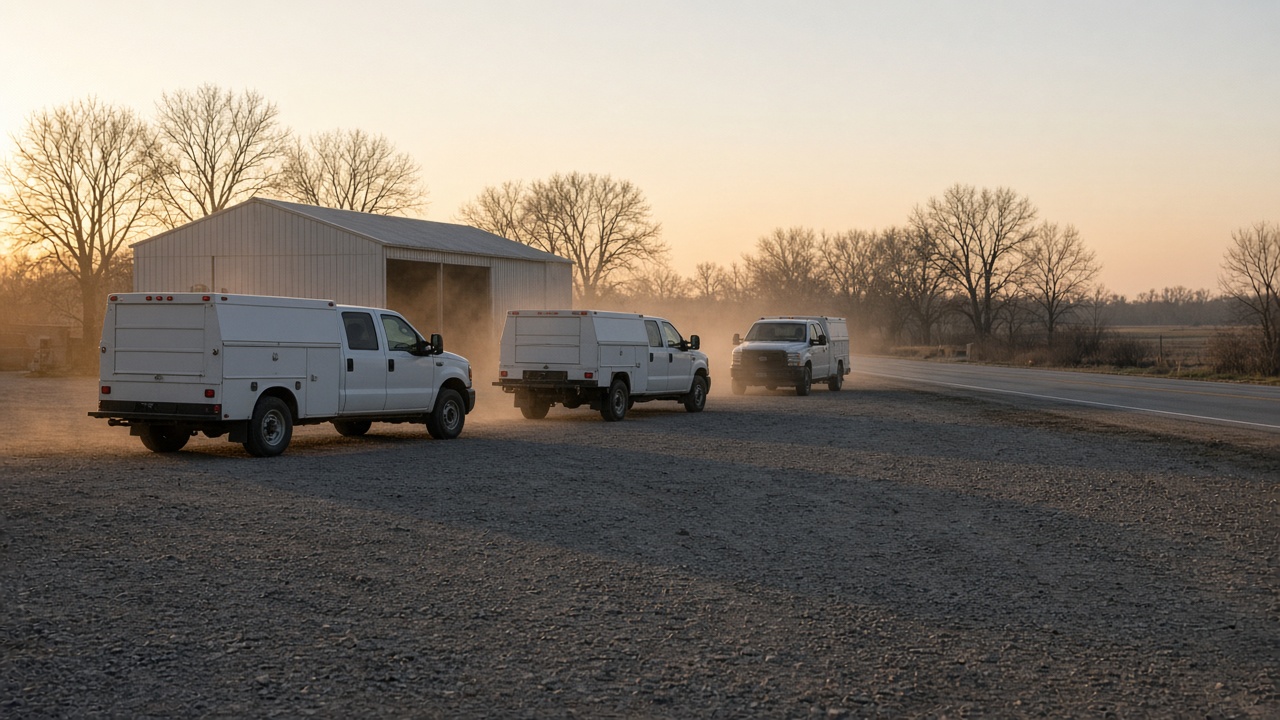
This week we launched TruckStock with a large national company. That sentence still feels a little unreal when I say it out loud. Another large company is ready to roll out across Indiana, Michigan, and Ohio, with a lot of trucks in the mix. Other large franchise and association-level organizations are showing interest. I am careful with that word, interest, because I have learned not to confuse a good conversation with a signed plan. Still, the conversations are real, and they are the right kind.
Local mom-and-pop shops are still part of this. I want them in it. They will not be the whole volume story, and I am honest about that. They are a marketing and community play, and they are also a reminder of why we started. A small shop has the same basic problem a large fleet does. They just have fewer people to absorb the mess when the system does not work.
I should mention a side story, because it happened, and then I want to set it down.
At one point another company claimed we had copied them. We had not. I won’t say more than that, because I don’t think piling on helps anyone. A customer stood up for us and dropped that supplier. I am grateful, and I am also aware that gratitude is not the same thing as a victory lap. It was a distraction. It cost time and attention we would rather have spent on the work. Then it was over, and we went back to building.
I keep thinking about that filmmaker flying from studio to studio with a DVD in his bag. I have done my own version of that. I have also done the quieter version, where you stop treating the next meeting as the thing that will save you, and you go back to the work that is actually yours.
This is not a story about getting ahead of God, or about finally being rewarded for patience. It is a story about timing and ownership, and about the kind of humility that is practical, not dramatic. You learn what is yours to carry. You learn what happens when you set that down in someone else’s basket. You learn, slowly, to come back around.
TruckStock is ours. It launched this week. I am proud of that, and I am also aware that a launch is a starting line, not a finish. There will be more trucks, more shops, more ordinary days when the software has to quietly do its job and get out of the way.
I am glad we kept it. I am glad we did not give up. And I am glad the next chapter, whatever it holds, starts with the work in our own hands.
